
In Summary Interoperability is the ability of different systems, machines, and software to share data…
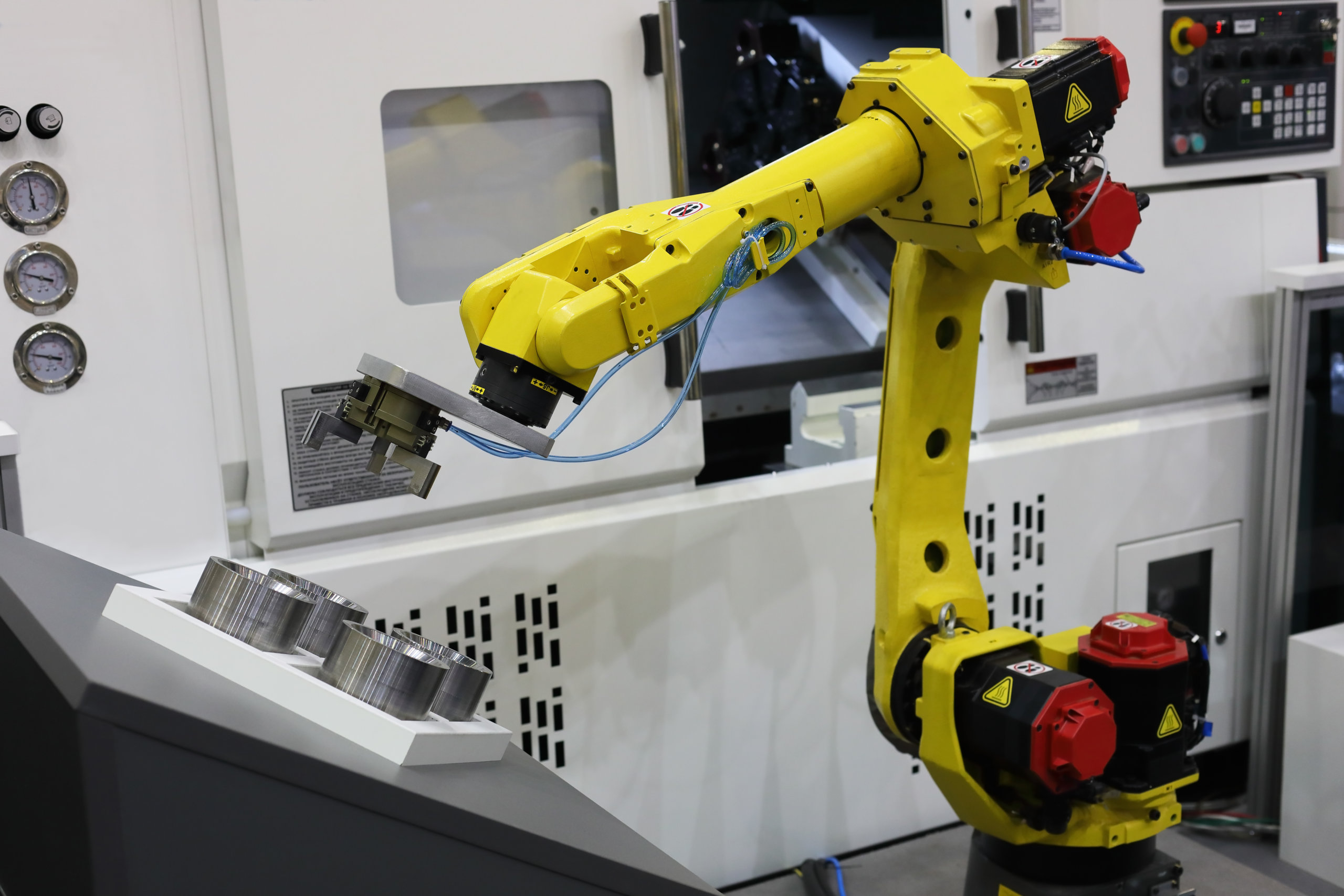
AI Without the Hype: Practical Applications That Deliver Real Business Value
Artificial intelligence has dominated business headlines for several years now. The promises have been bold. The case studies have been compelling. And yet, plenty of Australian manufacturers are still asking the same question: where does AI actually deliver value on the factory floor?
It is a fair question. For all the excitement around large language models and autonomous systems, the gap between boardroom enthusiasm and operational reality has left many businesses cautious. The good news is that AI is already generating measurable returns in manufacturing and industrial operations, and it does so through targeted, practical applications rather than sweeping transformation.
At Oiya Tech, we see this first-hand. AI is becoming an important layer within the broader automation ecosystem, enhancing the performance of robotic systems, improving decision-making, and helping Australian manufacturers stay competitive in an increasingly demanding market.
What does practical AI in manufacturing actually look like?
The most impactful AI applications in manufacturing share a common characteristic: they are solving specific, defined problems rather than attempting to automate everything at once.
Machine vision is one of the clearest examples. AI-powered vision systems can inspect products at speeds and tolerances that far exceed human capability. They detect surface defects, dimensional errors, and assembly faults in real time, reducing the cost of downstream quality failures. When integrated into a production line alongside robotic arms or gantry systems, machine vision closes the loop between detection and correction automatically.
Predictive maintenance is another application with strong return on investment. Traditional maintenance schedules are based on time intervals or reactive breakdown events, both of which carry costs: unnecessary downtime during scheduled maintenance or expensive emergency repairs when equipment fails unexpectedly. AI models trained on sensor data from SCADA systems and operational technology (OT) networks can identify early indicators of mechanical degradation and flag them before failure occurs. For a manufacturer running continuous shifts, that kind of foresight translates directly into uptime and throughput.
Process optimisation is a third area where AI adds genuine value. By analysing data streams from PLC systems and human-machine interfaces, AI can identify inefficiencies in cycle times, energy consumption, and material usage that would be difficult or time-consuming to detect through manual review. Those insights inform real operational decisions, from adjusting machine parameters to reconfiguring workflow sequencing.
Why the hype often misses the point
Much of the AI hype focuses on general-purpose capabilities: large models that can write, reason, and generate. These are impressive achievements. But the manufacturing context requires something more specific: reliable, deterministic performance within tightly constrained processes.
A robotic palletising system needs to perform consistently across thousands of cycles per shift. A steel frame assembly line needs precision and repeatability, not creativity. AI applications that deliver value in these environments do so because they are narrowly scoped, well-integrated, and trained on relevant operational data.
This is why the starting point for AI adoption in manufacturing should always be the problem, not the technology. What is the bottleneck? Where is quality variance occurring? What maintenance event caused the most disruption last quarter? Working backwards from a specific operational challenge leads to AI implementations that earn their place in the business case.
Integration matters as much as the algorithm
One aspect of AI adoption that often receives insufficient attention is integration. An AI model that generates useful predictions but cannot connect to the systems that act on those predictions delivers limited value. The power of AI in a manufacturing environment comes from its connection to the broader automation stack: the sensors, the PLCs, the SCADA systems, the robotic cells.
Getting that integration right requires the same discipline as any industrial automation project. It means understanding the data architecture, the communication protocols, the safety requirements, and the operational context. It also means designing for reliability and scalability, so that a system that works in a pilot can be expanded without rework.
At Oiya Tech, we approach AI as a component within a complete automation solution, not as a standalone product. When AI enhances the capability of a machine vision inspection system, a SCADA monitoring platform, or a predictive maintenance workflow, it earns its place by contributing to outcomes that matter: reduced downtime, improved throughput, lower defect rates, and stronger operational visibility.
The opportunity for Australian manufacturers
Labour shortages, rising input costs, and global supply chain pressures are all creating urgency around productivity in Australian manufacturing. AI, applied practically and integrated thoughtfully, is one of the tools available to address that urgency.
The businesses that will see the strongest returns from AI are those that treat it as an engineering challenge rather than a marketing one. Define the problem clearly. Source the right data. Integrate with existing systems. Measure the outcome.
That is how AI moves from hype to value. And that is exactly the kind of outcome Oiya Tech helps Australian manufacturers achieve.
FAQs
What is the difference between AI and standard industrial automation? Standard industrial automation follows fixed, pre-programmed rules. A robotic arm moves to a defined position and performs a defined action, every time. AI-powered automation adds a layer of adaptive decision-making. The system can learn from data, recognise patterns, and adjust its outputs based on what it observes. In a manufacturing context, this might mean a vision system that improves its defect detection accuracy over time, or a predictive maintenance model that refines its fault predictions as it accumulates more sensor data.
Do I need to replace my existing equipment to use AI? In most cases, no. AI applications in manufacturing are typically layered onto existing infrastructure rather than replacing it. Sensor data from your current PLC systems, SCADA platforms, and OT networks can feed AI models without requiring new hardware on the production line. The integration work involves connecting data sources and deploying the AI layer in a way that communicates with your existing systems.
How much data does an AI system need to be useful? This depends on the application. Machine vision systems can be trained on relatively modest datasets if the inspection criteria are well-defined. Predictive maintenance models generally require a longer historical data record to identify meaningful patterns. The most important factor is data quality: clean, consistent, and contextually labelled data will outperform large volumes of noisy or poorly structured data every time.
Is AI in manufacturing only viable for large operations? No. While large manufacturers have historically led AI adoption due to their data volumes and capital resources, the cost of AI tools and integration services has fallen significantly. Many mid-sized Australian manufacturers are now implementing targeted AI applications, particularly in quality inspection and predictive maintenance, with strong returns. The key is choosing an application that addresses a high-value problem rather than attempting a broad deployment.
Glossary of Key Terms
Artificial Intelligence (AI): A broad term for computer systems that perform tasks requiring human-like reasoning, such as recognising patterns, making predictions, or adapting to new inputs. In manufacturing, AI is applied to specific, well-defined tasks rather than general problem-solving.
Machine Vision: The use of cameras, sensors, and AI algorithms to enable machines to interpret and act on visual information. In manufacturing, machine vision is used for quality inspection, dimensional measurement, object detection, and guiding robotic movement with precision.
Predictive Maintenance: An AI-driven approach to equipment maintenance that uses sensor data and historical performance records to predict when a component is likely to fail. This allows maintenance to be scheduled before a breakdown occurs, reducing unplanned downtime and repair costs.
PLC (Programmable Logic Controller): An industrial computer used to control manufacturing processes and machinery. PLCs execute pre-programmed instructions and are the backbone of most automated production environments. AI can analyse data generated by PLCs to identify optimisation opportunities.
SCADA (Supervisory Control and Data Acquisition): A system used to monitor and control industrial processes across a facility or multiple sites. SCADA platforms collect real-time data from sensors and equipment, providing the operational visibility that AI models can analyse for performance insights.
OT Network (Operational Technology Network): The communications infrastructure that connects industrial control systems, sensors, and machinery. A well-designed OT network is a prerequisite for AI integration, as it determines how reliably data can be collected from across a production environment.
Industry 4.0: The fourth industrial revolution, characterised by the integration of digital technologies, automation, and data exchange in manufacturing. AI, robotics, IoT, and cloud computing are all considered Industry 4.0 technologies.
HMI (Human-Machine Interface): The touchscreen panels, displays, and control interfaces that allow operators to monitor and interact with automated systems. Modern HMIs can present AI-generated insights alongside standard operational data, giving operators a richer picture of system performance.
Computer Vision: A field of AI focused on enabling machines to interpret visual data from cameras and sensors. In industrial applications, computer vision underpins machine vision systems used for quality control and robotic guidance.
Digital Twin: A virtual model of a physical asset, process, or system that is updated with real-time data. AI can analyse digital twin data to simulate operational scenarios, predict outcomes, and support decision-making without disrupting live production.

Related Posts
Comments (0)