
In Summary Scalability is a design decision made at the start of a project, and…

Building Trust in Intelligent Systems: Security, Governance, and Transparency
In Summary
- Intelligent automation systems create real business value, but only when operators, managers, and end users trust them to behave predictably and safely.
- Trust is built through three interlocking pillars: robust security, clear governance, and honest transparency about how systems make decisions.
- Organisations that embed these principles at the design stage gain a competitive advantage over those that treat them as compliance afterthoughts.
Automation is delivering genuine results across Australian manufacturing. Productivity is up. Costs are down. Repetitive and hazardous tasks are being shifted to machines that do not tire, do not err from fatigue, and do not take sick days.
But a quieter challenge is emerging alongside the performance gains.
As systems become more intelligent, more connected, and more autonomous, the question of trust becomes central. Can operators rely on the system to behave consistently? Can managers verify what it is doing and why? Can the business demonstrate accountability to customers, partners, and regulators?
These are engineering questions as much as they are organisational ones. And the businesses getting automation right are the ones answering them deliberately.
Why Does Trust Matter in Intelligent Automation?
Intelligent systems, whether they involve robotics, SCADA platforms, OT networks, or AI-assisted controls, operate with a degree of autonomy that traditional machinery never had. A conveyor belt does what it is told. An intelligent materials handling system reads context, adjusts to conditions, and makes real-time decisions.
That autonomy creates value… and exposure.
A system operators do not understand is a system they will work around. A platform that cannot be audited is a liability in a regulated environment. A network that is inadequately secured is an entry point for disruption that can cascade across an entire facility.
Trust is the foundation that makes intelligent automation sustainable.
What Are the Core Security Requirements for Industrial Automation Systems?
Security in industrial environments is more complex than in IT. Operational technology networks are often legacy-heavy, physically distributed, and designed for uptime rather than permeability. Bolting on security after the fact rarely works.
Effective security for intelligent systems requires several things to be in place from the beginning.
Network segmentation ensures that OT environments are isolated from corporate IT, reducing the blast radius of any compromise. Access controls limit who and what can interact with critical systems, with authentication requirements proportionate to the sensitivity of each function. Patch and firmware management keeps system components current without compromising operational continuity.
Continuous monitoring is the other non-negotiable. Knowing that an anomaly has occurred within minutes rather than days is the difference between a contained incident and a serious operational failure. Intelligent systems generate rich telemetry: the organisations that use it for security monitoring gain far more than those treating it purely as performance data.
At Oiya Tech, OT network design treats security as a first-class requirement. Connectivity and control capability are built on a foundation that accounts for threat exposure, not just throughput.
How Does Governance Keep Intelligent Systems Accountable?
Security protects the system from external threats. Governance protects the organisation from the system itself.
That means defining, in advance, how the system is permitted to behave, who has authority to change that behaviour, and how decisions are recorded.
In practice, governance covers several layers. Policy definition establishes what the system can and cannot do autonomously, and under what conditions a human must be consulted or given final authority. Change management ensures that updates to logic, thresholds, or configurations are reviewed, approved, and documented. Audit trails create a verifiable record of what the system did, when, and in response to what inputs.
For manufacturers operating under safety standards, quality certifications, or industry regulations, these records are essential. For businesses without formal compliance obligations, they remain valuable: they make root cause analysis faster, reduce disagreements about system behaviour, and create the institutional knowledge needed to manage systems as they evolve.
Governance is also how organisations avoid the trap of becoming dependent on systems they cannot fully explain. A well-governed platform is one the team can interrogate, update, and confidently operate for years.
What Does Transparency Actually Mean in an Automated System?
Transparency is the most misunderstood of the three pillars.
It does not require exposing proprietary algorithms or publishing system logic publicly. It means ensuring that the people responsible for operating and overseeing a system have enough visibility into its behaviour to do their jobs confidently.
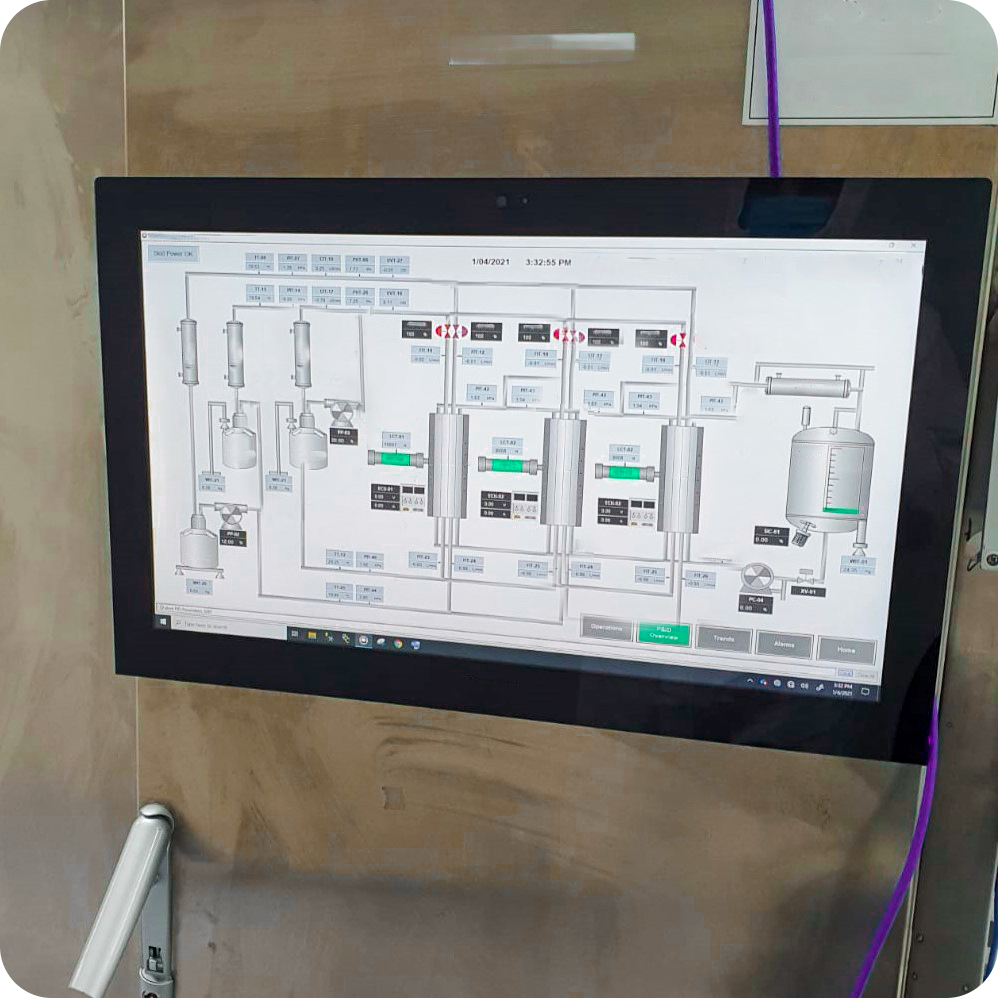
In a practical sense, transparency looks like this. Human machine interfaces that surface not just outputs but the inputs and conditions that produced them. Exception handling that clearly flags when the system is operating outside its expected parameters. Reporting structures that allow managers to understand performance trends and identify where the system is drifting from its design intent.
Transparency is also what makes continuous improvement possible. A system operating as a black box accumulates risk silently. A system whose behaviour is observable and explainable can be refined, optimised, and extended with confidence.
How Should Organisations Approach Building Trust From Day One?
The organisations that succeed with intelligent automation are not the ones with the most sophisticated technology. They are the ones that treat trust as a design requirement from the first conversation.
That means including security architecture in scope, not as an addon. It means defining governance frameworks before go-live, not after the first incident. It means choosing integration partners who can explain how their systems behave, not just what they deliver.
Automation should be a source of competitive advantage and operational confidence. When security, governance, and transparency are built in, that is exactly what it becomes.
FAQs
What is OT network security and why does it matter for manufacturers? Operational technology (OT) network security refers to the practices and systems used to protect industrial control environments from cyber threats. Unlike IT networks, OT environments control physical processes, making a security failure a potential safety event as well as a data incident. Manufacturers with connected automation systems need OT-specific security design to manage that exposure.
What is the difference between IT security and OT security? IT security focuses on protecting data and information systems, typically accepting some downtime in response to incidents. OT security prioritises availability and physical safety, often in environments with legacy hardware and strict uptime requirements. The two disciplines require different approaches and should be designed together rather than treated as the same problem.
How does governance differ from compliance? Compliance is a minimum standard set by external bodies. Governance is the internal system an organisation uses to ensure its technology behaves as intended, remains accountable, and can be managed over time. Compliance often requires governance, but effective governance goes beyond what regulators ask for and delivers operational benefits regardless of external requirements.
What makes an automation system “transparent”? A transparent system provides operators and managers with enough visibility into its inputs, logic, and outputs to understand why it behaved as it did in any given situation. This typically includes clear HMI design, detailed logging, exception reporting, and the ability to audit historical decisions. Transparency does not require exposing proprietary technology; it requires that responsible users can meaningfully oversee the system.
Can smaller manufacturers afford to invest in security and governance? Security and governance are scalable. The priority is to embed the right principles at the design stage, which is far less costly than retrofitting controls after an incident or compliance finding. Many of the most effective measures, such as network segmentation, access controls, and audit logging, are achievable without significant additional cost when planned from the outset.
How does Oiya Tech approach security and governance in its automation projects? Oiya Tech designs OT networks and automation systems with security, accountability, and operational transparency as foundational requirements. Every project is engineered to ensure the resulting system is not just capable but trustworthy: one the client’s team can operate, audit, and confidently evolve over time.
Glossary
Operational Technology (OT): Hardware and software used to monitor and control physical processes, devices, and infrastructure. In manufacturing, this includes PLCs, SCADA systems, industrial robots, and the networks connecting them.
OT Network Security: The discipline of protecting operational technology environments from cyber threats, unauthorised access, and disruption, with particular attention to the unique requirements of industrial and manufacturing settings.
SCADA (Supervisory Control and Data Acquisition): A control system architecture that uses computers, networked data communications, and graphical user interfaces to supervise and manage industrial processes in real time.
PLC (Programmable Logic Controller): An industrial computer used to automate electromechanical processes, such as control of machinery on factory assembly lines, with reliable and easily programmable operation.
HMI (Human Machine Interface): The interface through which operators interact with an automated or controlled system, typically displaying process data, status information, and control options in a visual format.
Network Segmentation: The practice of dividing a computer network into sub-networks to improve performance and security, reducing the risk that a compromise in one area can spread to others.
Governance Framework: A structured set of policies, roles, responsibilities, and processes that determine how a system or organisation is directed, controlled, and held accountable over time.
Audit Trail: A chronological record of system activity that provides documentary evidence of events, changes, and decisions for purposes of security monitoring, compliance, and operational review.

Related Posts

Comments (0)