
In Summary Interoperability is the ability of different systems, machines, and software to share data…

Scalable by Design: Preparing Your Technology Stack for Growth
In Summary
- Scalability is a design decision made at the start of a project, and retrofitting it into a system that was built for today’s throughput is far more expensive than building it in from day one.
- A scalable technology stack is modular, standardised, and data-ready, so capacity can be added in stages as demand grows rather than through disruptive rip-and-replace programs.
- Businesses that architect for growth protect their uptime, their capital, and their ability to say yes to the next big contract.
Growth is supposed to be good news. A major new customer signs on, order volumes double, or a product line takes off. Then the operations team discovers the uncomfortable truth: the technology stack that ran the business beautifully at last year’s volumes has become the bottleneck.
This is one of the most common failure patterns we see in Australian manufacturing. Systems are specified for the demand that exists at the time of purchase, with little thought given to what happens when that demand grows. The result is automation that performs well right up until the moment the business succeeds, at which point every expansion becomes a custom engineering project.
Scalability is a design decision. It gets made, deliberately or by default, on day one. Here is what it looks like to make it deliberately.
Start with the architecture, not the equipment
When businesses plan for growth, the conversation usually jumps straight to hardware: a faster robot, a bigger conveyor, more storage. But raw capacity is the easy part. The hard part is whether the surrounding architecture can absorb that capacity without breaking.
A scalable stack is one where the layers are cleanly separated. Mechanical handling, control logic, safety systems, data collection, and higher-level orchestration should each be able to grow independently. When a throughput increase in one area forces a redesign of everything connected to it, the system was never scalable, no matter how impressive the individual machines were.
This is why we encourage clients to think in terms of platforms rather than projects. A project solves today’s problem. A platform solves today’s problem in a way that leaves room for tomorrow’s.
Modularity keeps the cost of growth predictable
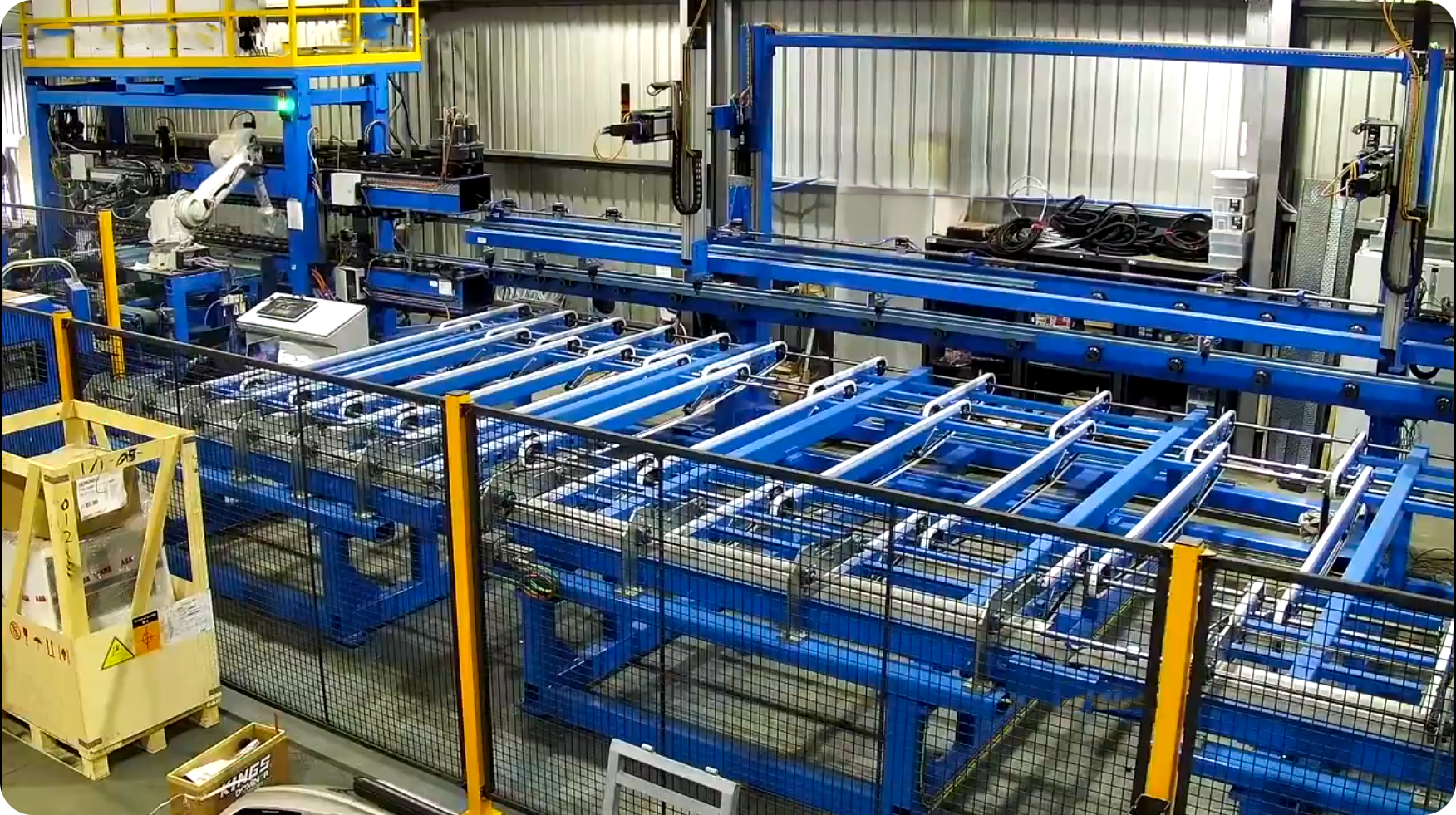
The most scalable systems are built from components that can be duplicated, upgraded, or swapped without touching the rest of the line. Robot cells, end-effectors, vision systems, and conveyor sections should behave like building blocks.
When a client needs to lift output, the question should be “how many more modules do we add?” rather than “how much of this do we have to rebuild?” That distinction determines whether growth costs weeks or months, and whether it happens during a scheduled window or an extended shutdown.
Mobile robotics takes this principle further. Because mobile robots layer over an existing layout rather than being bolted into it, they allow capacity to be added incrementally, redeployed as flows change, and scaled in line with actual demand rather than forecast demand.
The control layer decides how far you can scale
On the factory floor, the PLC is where scalability lives or dies. Well-structured control logic, with clear separation between safety, sequencing, and product parameters, means new equipment can be integrated by configuration rather than by rewriting code.
Standardisation matters just as much. When alarms, diagnostics, and data signals follow consistent conventions, every new module behaves predictably, operators need less retraining, and maintenance teams are supporting one coherent system instead of a collection of one-offs. Offline simulation completes the picture, allowing expansions to be validated before they ever touch live production.
Data readiness is scalability’s quiet prerequisite
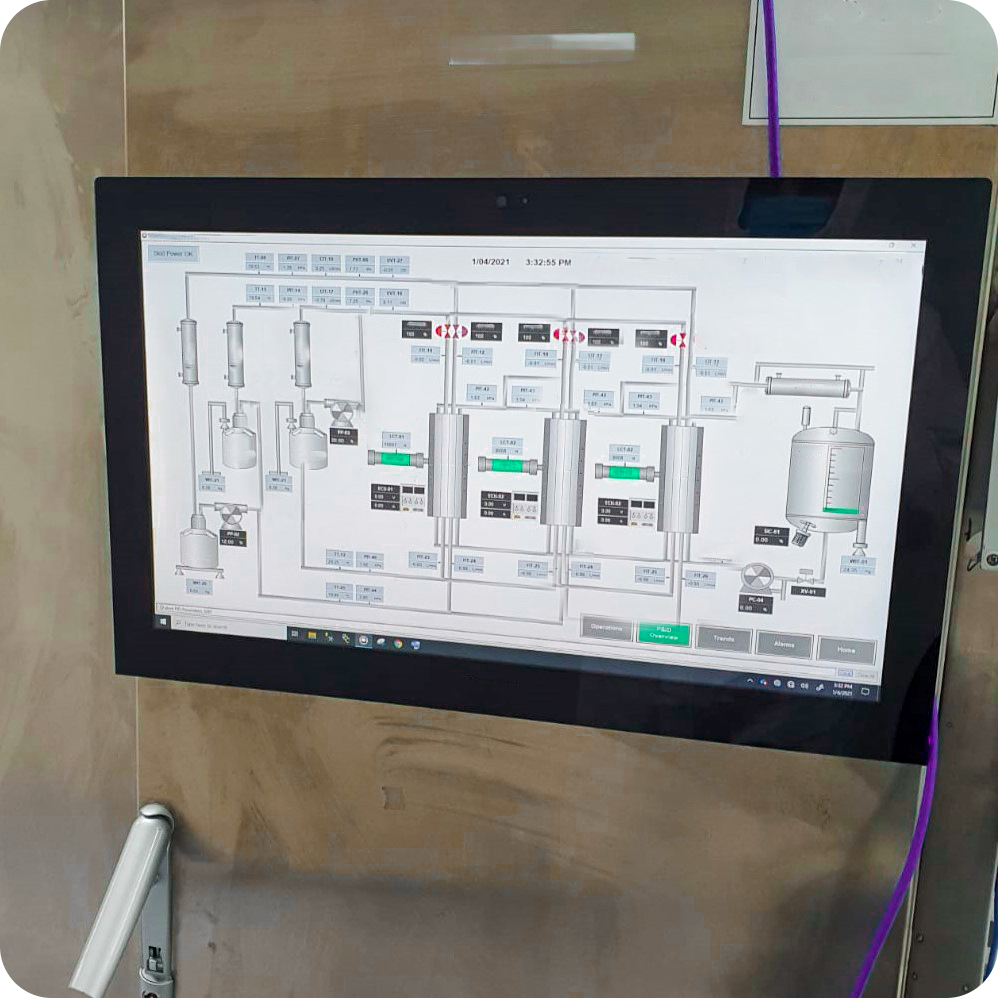
A stack that cannot report on itself cannot scale intelligently. As volumes grow, decisions about where to add capacity should be driven by evidence: cycle times, bottleneck analysis, downtime causes, and quality trends. Building standardised data collection into the stack from the outset means that when the growth decision arrives, it is made with facts rather than instinct.
Growth should be a series of steps, not a leap
The real payoff of scalable design is optionality. You can automate one process now and the next when the ROI is proven. You can add a shift’s worth of capacity without a layout rebuild. You can take on the contract that doubles your volumes, confident the stack will keep pace.
At Oiya Tech, this is how we approach every engagement: as Sydney-based automation specialists working across robotics integration, PLC programming, materials handling, and mobile robotics, our job is to architect systems that grow with the business rather than systems the business grows out of.
Because the goal was never automation for its own sake. It is a technology stack that is ready for your success before it arrives.
FAQs
How do I know if my current systems will scale? Ask what happens when volumes rise by 50 per cent. If the answer involves rewriting control code, redesigning the layout, or replacing core equipment, the system is tightly coupled and will resist growth. If the answer is adding modules and adjusting parameters, you are in good shape.
Does designing for scalability cost more upfront? Modestly, in some cases. Standardised control architecture, modular cells, and data infrastructure carry a small premium at installation. That premium is consistently dwarfed by the cost of retrofitting scalability into a system that was built without it.
Can an existing facility become scalable, or is it only for new builds? Existing facilities can absolutely move toward scalable design. The usual path is staged: standardise the control layer, introduce modular cells at the biggest bottleneck, and layer in mobile robotics where fixed infrastructure is too rigid. Each stage delivers value on its own.
Where should a growing manufacturer start? With an assessment of what is tightly coupled. Understanding which parts of the stack can change independently, and which cannot, tells you exactly where growth will hurt and where to invest first.
Glossary of Terms
Technology stack: The combined set of hardware, control systems, software, and networks that run an operation, from mechanical equipment through to data and orchestration layers.
Modularity: A design approach where systems are built from independent components that can be added, upgraded, or replaced without redesigning the whole.
PLC (Programmable Logic Controller): The industrial computer that coordinates sensors, actuators, safety logic, and sequencing on the factory floor. Well-structured PLC design is central to scalable automation.
Tightly coupled system: A system where components depend heavily on one another, so a change in one area forces changes across many others. The opposite of scalable design.
Mobile robotics: Robots that move through a facility rather than being fixed in place, allowing material handling and task capacity to be added or redeployed as layouts and volumes change.
Offline simulation: Testing and validating automation changes in a virtual environment before deploying them to live production, protecting uptime during expansion.
Orchestration layer: The higher-level software that coordinates multiple machines, cells, and workflows so they operate as one system.

Related Posts

Comments (0)