
In Summary Intelligent automation systems create real business value, but only when operators, managers, and…
Why Interoperability Is the Hidden Advantage in Digital Transformation
In Summary
- Interoperability is the ability of different systems, machines, and software to share data and work together, and it is often the deciding factor in whether a digital transformation succeeds.
- Businesses that prioritise connected systems reduce costly delays, redundant manual work, and the risk of making decisions based on incomplete information.
- In industrial and manufacturing environments, interoperability is a practical engineering challenge, and getting it right from the outset determines how much value automation can actually deliver.
Most digital transformation projects are sold on the headline features: faster production, smarter reporting, reduced labour costs. The technology itself gets the attention. What rarely makes it into the pitch is whether all those systems are setup to work together to deliver the greatest benefit from the adoption of the technology
Interoperability is the unglamorous part of transformation. It is the plumbing that makes everything else run. And in operations-heavy industries, it is often the single greatest factor in determining whether an investment in automation and digital technology delivers on its promise.
What Does Interoperability Actually Mean?
Interoperability is the ability of different systems, devices, and software to exchange data and act on that data without requiring manual intervention.
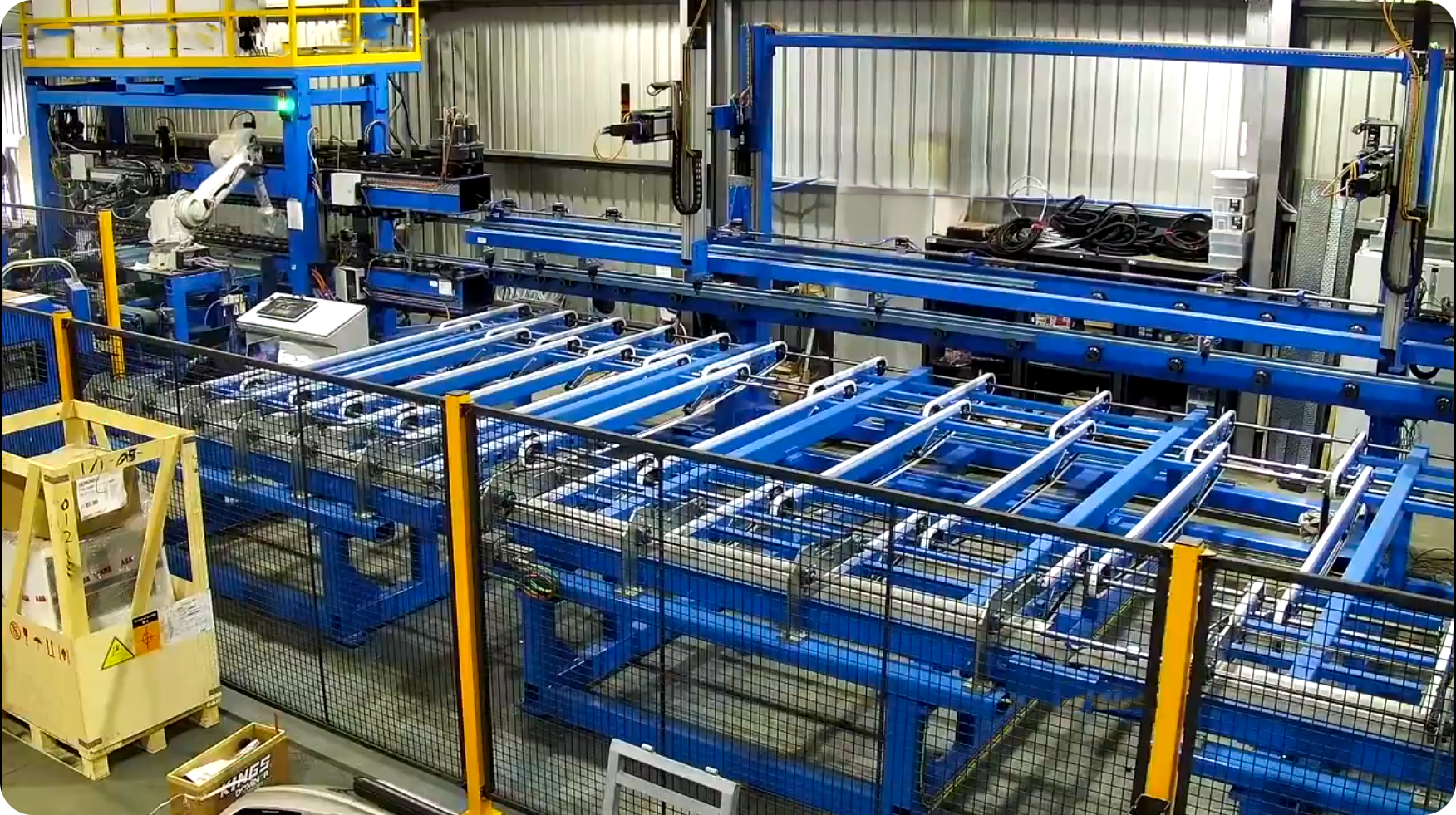
In a manufacturing environment, that might mean PLC programming on the floor communicating directly with a SCADA system, which feeds data to an ERP platform, which triggers a materials order. Each step happens automatically because the systems share a common language.
When interoperability is absent, those same steps rely on people to move information between systems. Data gets exported, reformatted, and re-entered. Decisions get delayed. Errors creep in.
The problem is common. Many facilities run a mix of older operational technology (OT) and newer IT systems that were never designed to communicate. The result is what engineers call data siloes: information locked inside a single system where no one else can reach it.
Why Does Interoperability Matter More as Businesses Scale?
A small operation can absorb disconnected systems. People fill the gaps, and the cost is manageable. As a business scales, those gaps multiply.
More machines mean more data. More data means more decisions. If the systems generating that data cannot share it cleanly, the organisation ends up investing in automation while still depending on manual processes to keep everything aligned.
This is a surprisingly common failure mode. A business installs a new robotic cell, updates its line control software, and adds a quality monitoring tool. Each system works. None of them talk to each other. Operators are still exporting CSV files and reconciling numbers by hand.
The business has invested in technology but has not changed how information moves. The efficiency gains are partial at best.
How Does Poor Interoperability Create Hidden Costs?
The costs of disconnected systems rarely appear on a single line in a budget. They are distributed across the organisation in ways that are hard to attribute directly.
Downtime is one example. When a fault occurs and the diagnostic data from a machine cannot be accessed quickly because it lives in an isolated system, troubleshooting takes longer. The machine sits idle while someone manually pulls logs and cross-references them against maintenance records.
Decision-making is another. When production data, quality data, and inventory data each live in separate platforms, managers rarely have a complete picture. They rely on summaries prepared by someone who has already made judgement calls about what to include. That introduces lag and increases the risk of acting on partial information.
Then there is the cost of growth. Adding new equipment or software to a fragmented environment is expensive. Every addition requires custom integration work rather than a clean connection to an established data architecture.
What Role Do Standards Play in Connected Systems?
Industrial interoperability relies heavily on communication standards. These are agreed protocols that define how devices and systems exchange data, regardless of who manufactured them.
OPC UA (Open Platform Communications Unified Architecture) is one of the most widely adopted standards in industrial automation. It allows equipment from different vendors to share structured data securely and in real time. A robot from one manufacturer, a CNC machine from another, and a quality camera from a third can all feed into the same data layer if they speak OPC UA.
MQTT is another common protocol, widely used in IoT environments for lightweight, efficient messaging between sensors and control systems.
The practical value of these standards is freedom. When systems are built around open protocols rather than proprietary connections, businesses are not locked into a single vendor. They can replace a component, add new capability, or scale up without having to renegotiate their entire technology stack.
How Does Interoperability Support AI and Advanced Automation?
Artificial intelligence and machine learning tools require large volumes of clean, consistent data to function well. An AI model trained to detect quality defects on a production line is only as good as the data it can access.
If that data is trapped in siloed systems, fragmented across formats, or unreliable because it passes through manual handling steps, the AI’s performance suffers. The technology can be cutting-edge. The results will still be mediocre.
Interoperability is the prerequisite for AI to work as intended. When data flows cleanly from sensors to control systems to analytics platforms, AI tools have what they need to identify patterns, generate predictions, and trigger responses.
The same logic applies to advanced automation. A system that can adjust its own parameters in response to changing conditions, anticipate maintenance needs, or optimise throughput dynamically requires connected, real-time data. Without it, the automation is reactive at best.
What Does a Well-Integrated Industrial Environment Look Like in Practice?
The goal is not complexity for its own sake. A well-integrated environment is one where information moves from the machine to the decision-maker without unnecessary friction.
On the plant floor, that means sensors and actuators communicating with PLCs. PLCs feeding data to SCADA systems. SCADA providing operators with a real-time view of what is happening across the facility. That data also flowing to higher-level systems for scheduling, maintenance, and reporting.
Each layer has a clear role. Each layer connects to the next. When something goes wrong, the problem is visible immediately and in context, rather than buried in a log file that someone needs to extract and interpret manually.
When new equipment is added to this environment, it connects to the existing data architecture rather than creating a new island. The integration cost is low. The value is immediate.
This is the compounding benefit of building for interoperability from the start. Every subsequent investment in technology returns more value because the infrastructure is already there to support it.
The Competitive Edge Is Connectivity
Digital transformation is often discussed in terms of individual technologies: robotics, AI, cloud platforms, IoT sensors. Those technologies matter. But their value depends almost entirely on whether they can share information and act in concert.
Interoperability is what converts a collection of capable systems into an intelligent, responsive operation. It is the infrastructure beneath the headline features, and in most industrial environments, it is where the real competitive advantage is built.
Businesses that get this right early spend less on integration later, make faster and better decisions, and are able to adopt new technology without dismantling what they already have.
That is why interoperability belongs at the centre of any digital transformation strategy, not as an afterthought, but as the foundation everything else is built on.
FAQs
What is the difference between integration and interoperability?
Integration typically refers to connecting two specific systems together, often through a custom-built link. Interoperability is broader: it describes the ability of many different systems to communicate and share data using common standards, without requiring a bespoke connection for every pairing. Interoperable systems are generally easier to maintain and extend than point-to-point integrations.
Can older industrial equipment be made interoperable with newer systems?
Yes, in most cases. Legacy equipment that lacks modern communication protocols can often be retrofitted with gateways or edge devices that translate its outputs into formats that modern systems can read. This approach lets businesses extend the life of existing machinery while still connecting it to a broader digital architecture.
How does interoperability affect cybersecurity in operational technology environments?
Connecting systems does increase the attack surface if security is not factored into the design. Modern OT network design addresses this through network segmentation, role-based access controls, and the use of secure protocols like OPC UA, which has built-in security features. Interoperability and security are not in conflict, but security needs to be built into the architecture, not added on afterwards.
Is interoperability only relevant for large manufacturers?
No. The scale of the problem differs, but the principle applies to any operation that uses more than one system. Smaller manufacturers often feel the impact of disconnected systems acutely because they have less capacity to absorb the manual workarounds that fill the gaps. Connected systems let smaller teams do more with less.
How do we know if our current systems are interoperable enough?
A practical test is to ask where data moves manually in your operation. If information is being exported, emailed, re-entered, or verbally communicated between systems, that is a gap. An audit of your current data flows, communication protocols, and integration points will reveal where the friction is concentrated and where connectivity improvements would have the most impact.
Glossary
Data silo: A set of data held by one system or department that is not accessible to other systems or teams within the same organisation.
ERP (Enterprise Resource Planning): Business management software that integrates core processes such as finance, supply chain, operations, and procurement into a single system.
IIoT (Industrial Internet of Things): The use of connected sensors, instruments, and devices in industrial settings to collect and exchange data, enabling smarter monitoring and control.
MQTT (Message Queuing Telemetry Transport): A lightweight messaging protocol commonly used in IoT environments to transmit small packets of data between devices efficiently.
OPC UA (Open Platform Communications Unified Architecture): An industry-standard communication protocol for industrial automation that allows machines, sensors, and software from different vendors to share data securely.
OT (Operational Technology): Hardware and software that monitors and controls physical devices, processes, and infrastructure in industrial environments, as distinct from conventional IT systems.
PLC (Programmable Logic Controller): A ruggedised industrial computer used to control manufacturing processes and machinery, programmed to execute specific automation logic.
SCADA (Supervisory Control and Data Acquisition): A system used in industrial environments to monitor and control equipment and processes across a facility, aggregating data from PLCs and other devices into a centralised view.

Related Posts
Comments (0)